Hinge Company
Company
Shop By Category
T&Cs
Shop Online
  • Box contents listed
  • Free tracked Australia-wide delivery over $150
  • 14-day returns

Ball bearing door hinges | heavy duty door hinges | stainless steel butt hinges

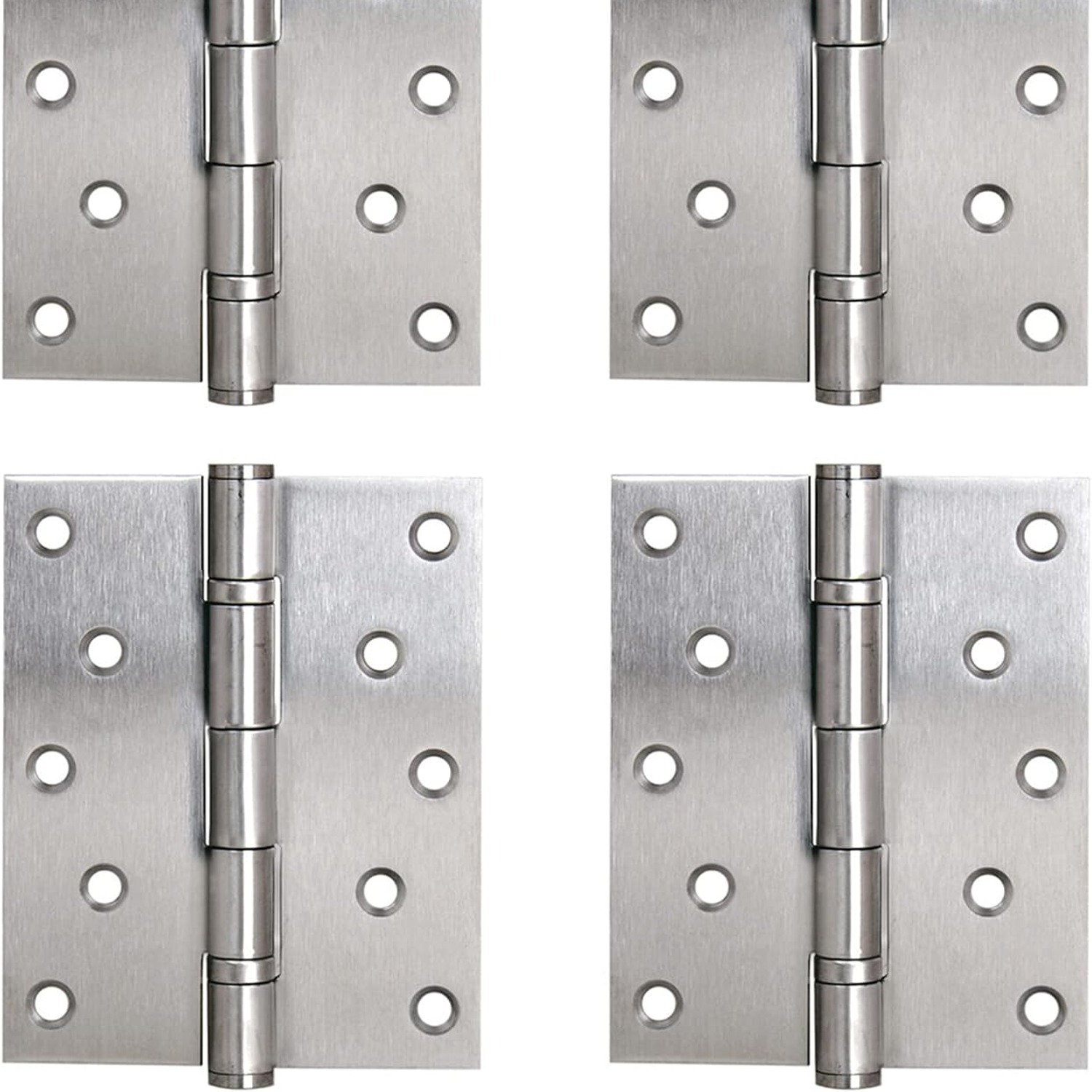
Ball Bearing Door Hinges, Stainless Steel, 127 x 102mm (4 Pack)

$150.99 $180.99 Save $30
  • Four Ball Bearings
  • 120 kg Rated
  • Grade 304 Stainless
  • Screws Included

Price: $150.99 $180.99

  • Delivery time: 7 to 14 working days (shipped to us from an overseas warehouse first)
  • Free tracked Australia-wide delivery on orders $150+, otherwise a flat $15
  • Pay by card or PayPal, handled by the payment provider
  • 14 days to change your mind, plus your statutory rights
Product specifications
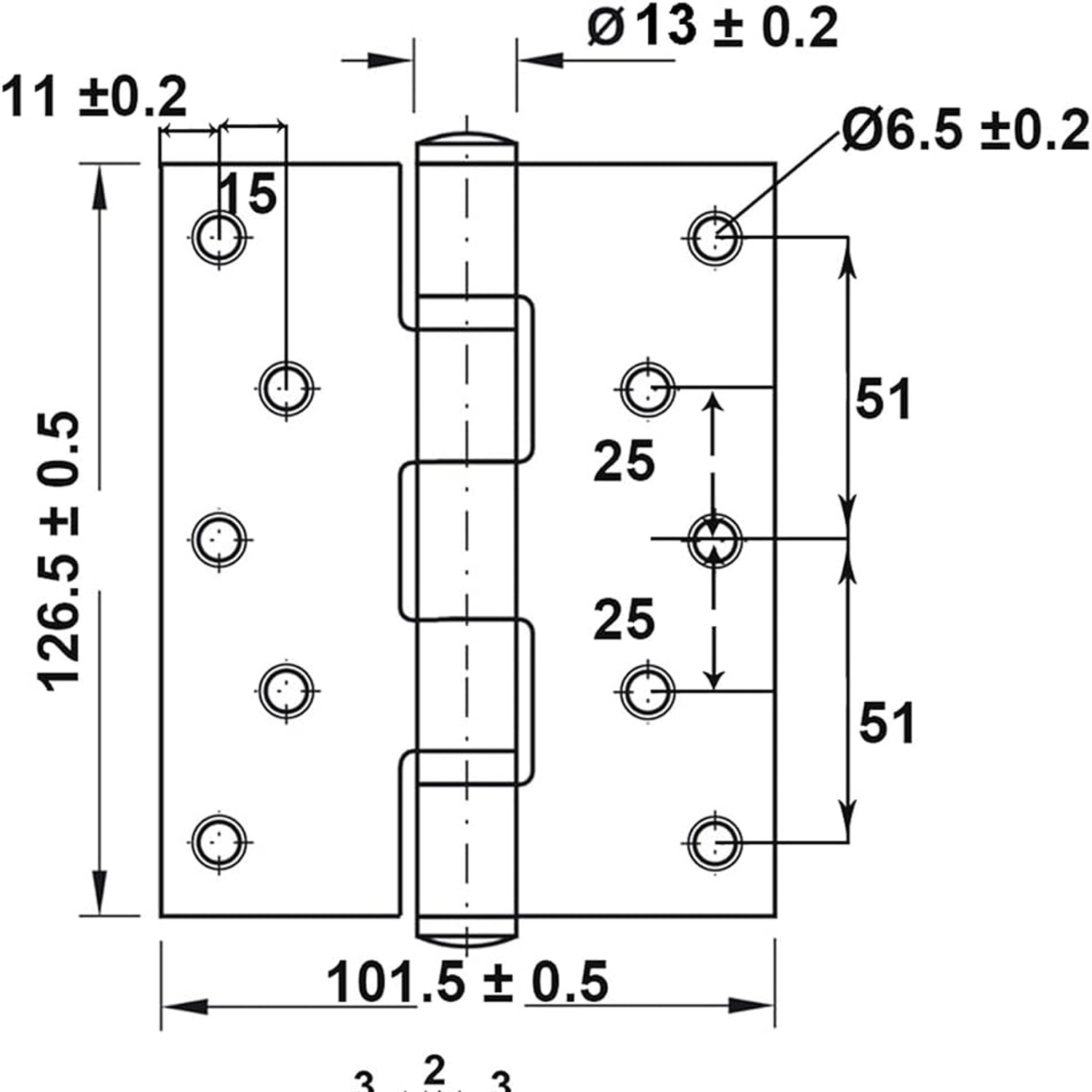
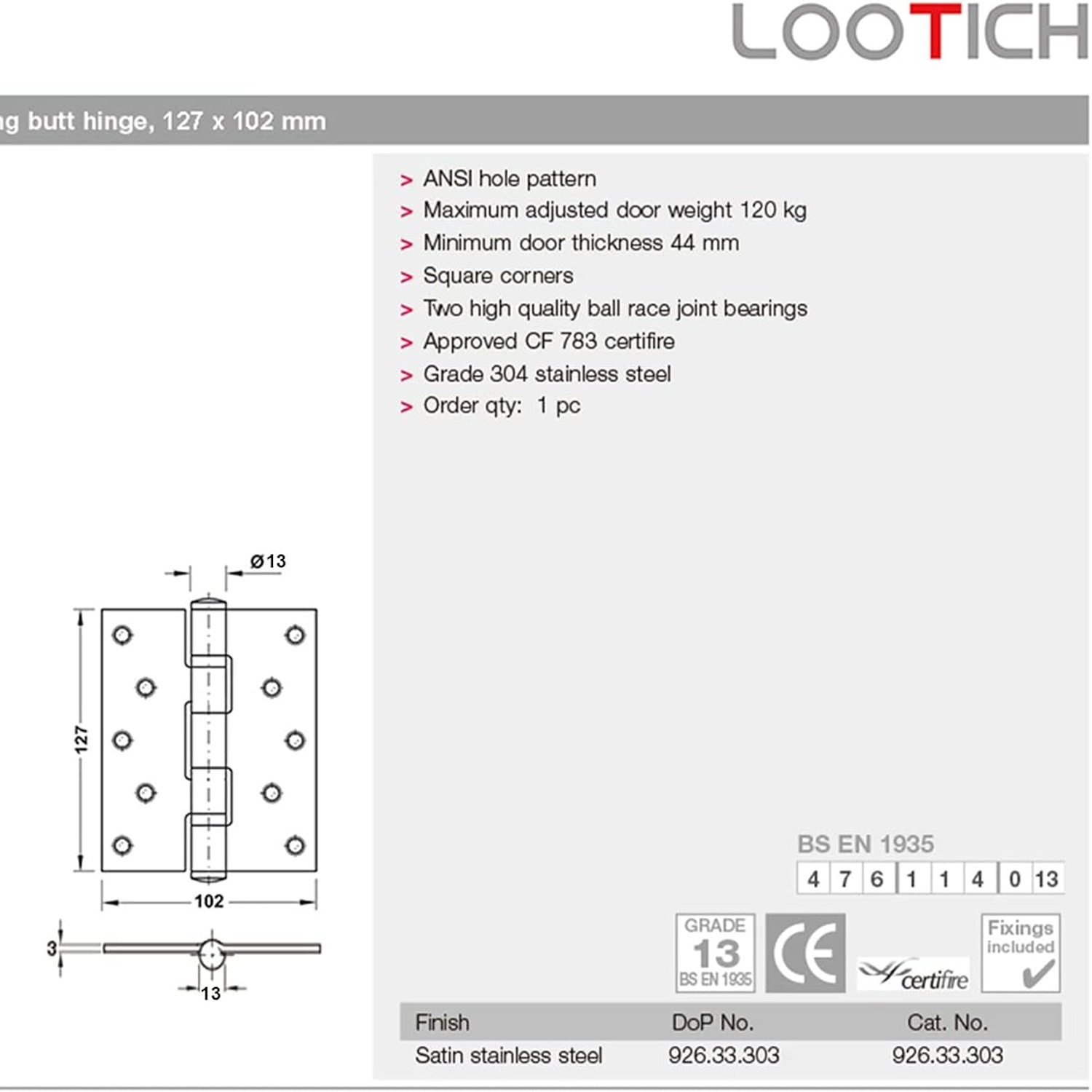
Hinge Size127mm (5") x 102mm (4")
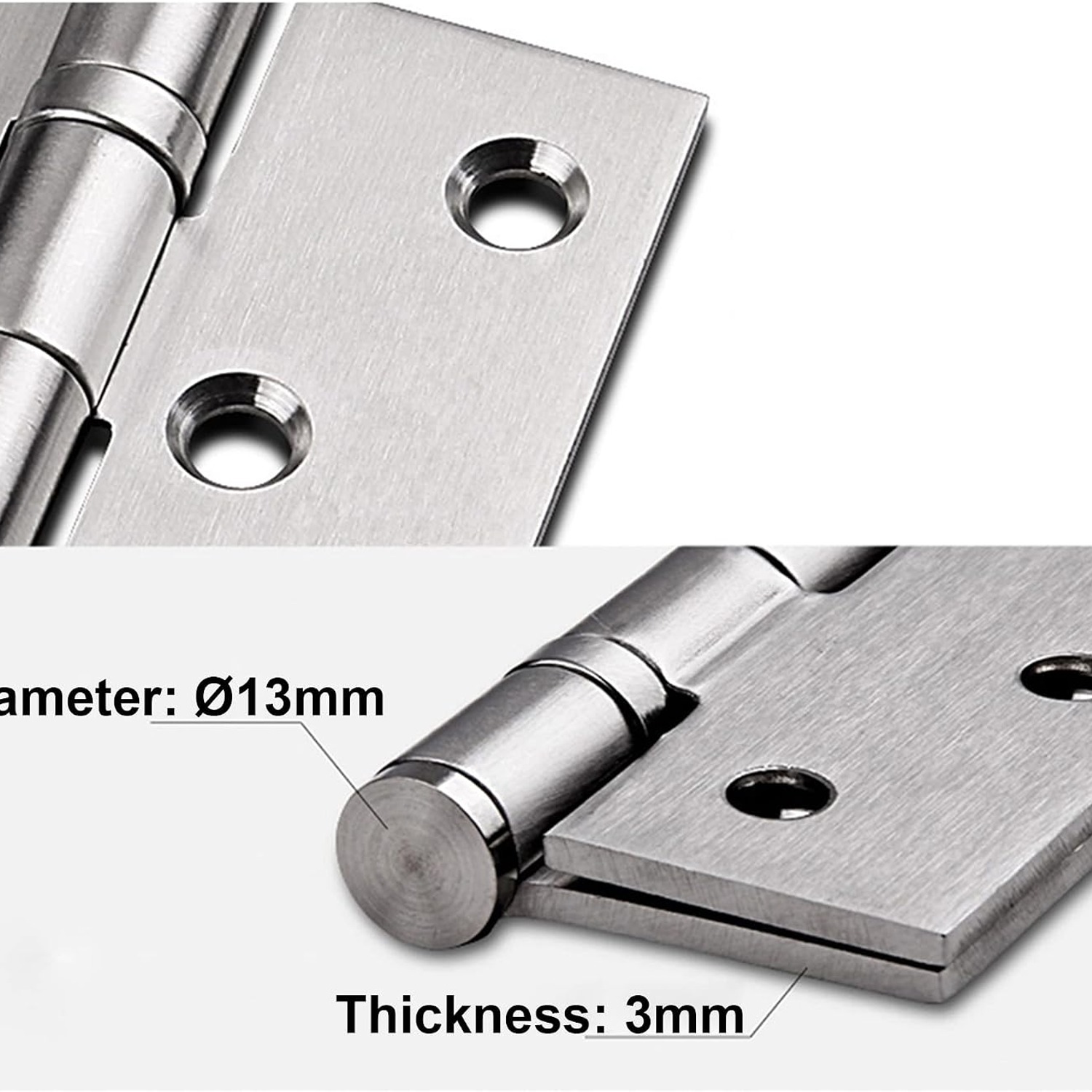
Leaf Thickness3mm
MaterialGrade 304 stainless steel
FinishSatin, nickel plated
ColourSilver
Corner StyleSquare
Bearings4 steel ball bearings, 2 race joints
Knuckle Diameter13mm
Hole Count4
Hole PatternANSI
RatingBS EN 1935 grade 13
Maximum Adjusted Door Weight120 kg (using 3 hinges)
Minimum Door Thickness45mm
Mounting TypeDoor mount
Pack Quantity4 pieces (2 pairs)
Included ComponentsFixing screws
Item Dimensions (L x W)12.7cm x 10.2cm
Item Weight1.59 kg
BrandLOOTICH
ManufacturerLOOTICH
UPC751940369541
Weight1.59 kg
Shipping & returns

Tracked delivery anywhere in Australia. It is free on orders of $150 or more, and a flat $15 below that.

If it is not right for you, send it back within 14 days of delivery in resaleable condition and we refund the price you paid, including standard delivery. That is a voluntary policy we offer on top of your legal rights. You cover the cost of returning it unless the item is faulty.

If it arrives faulty, damaged or not as described, we put it right at no cost to you under the Australian Consumer Law and the Competition and Consumer Act 2010, return postage included.

Shipping details · Refunds and returns

Four Ball BearingsTwo bearing race joints per hinge keep the swing smooth and quiet.
120 kg RatedMaximum adjusted door weight of 120 kg when three hinges are used.
Grade 304 StainlessStainless steel leaves with a satin finish and nickel plated detail.
Screws IncludedSupplied as four hinges (two pairs) with fixing screws in the box.

Hang a heavy door that swings quietly and stays true for years with ball bearing door hinges built from grade 304 stainless steel.

Four steel ball bearing races, a 120 kg adjusted door weight rating across three hinges and an ANSI hole pattern make these a straightforward upgrade on tired, squeaking butt hinges.

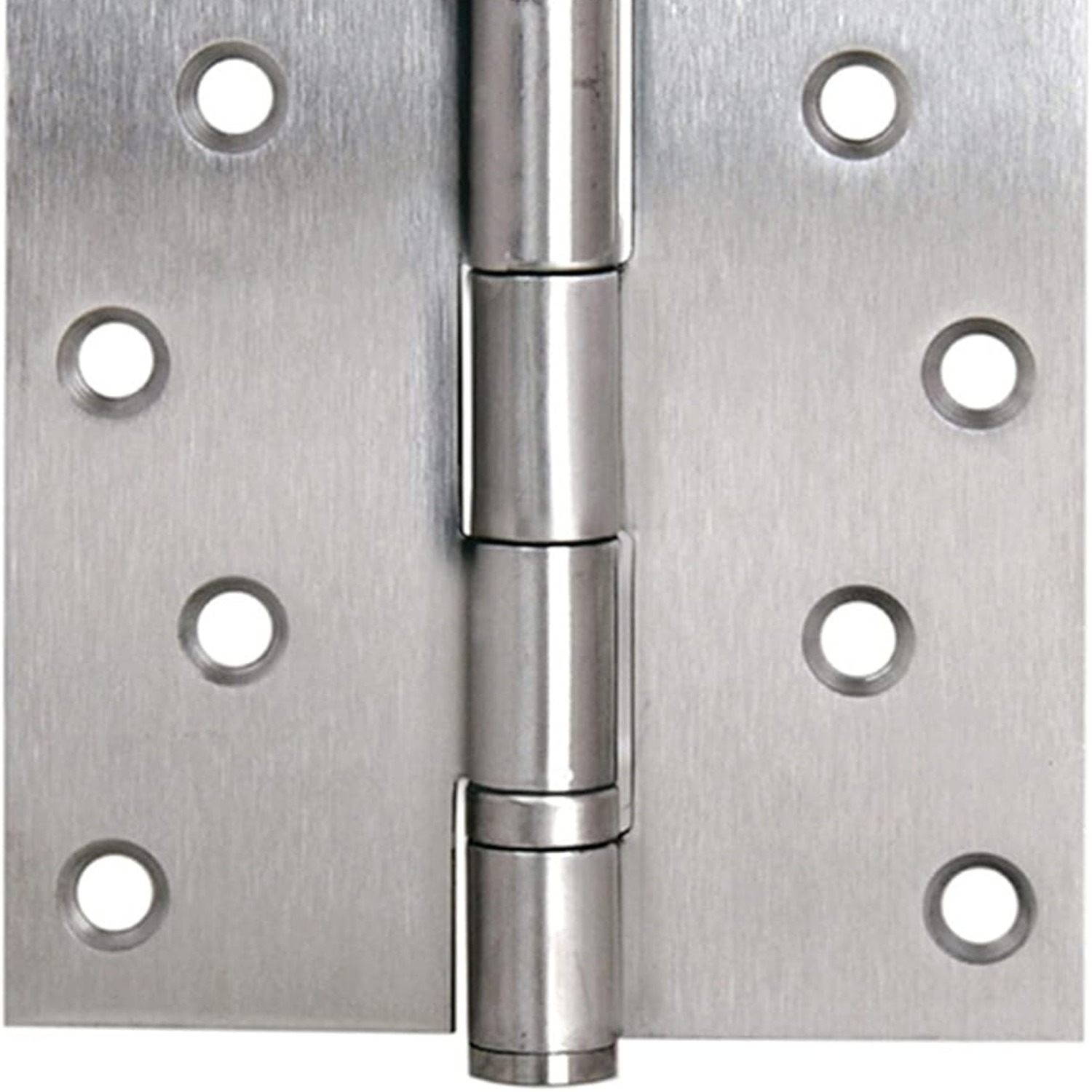
These ball bearing door hinges are made from grade 304 stainless steel and finished in satin, so they look at home on both modern and older doors.

Each hinge carries four steel ball bearings across two race joints, which is what keeps a heavy door swinging smoothly instead of grinding and squeaking.

At 127mm x 102mm x 3mm with square corners and an ANSI hole pattern, they drop into most standard mortices cut for a 5 inch butt hinge.

The maximum adjusted door weight is 120 kg when three hinges carry the load, which covers most solid timber and metal internal doors.

The pack contains four hinges (two pairs) with fixing screws, so you can hang two normal doors or one heavy door with a spare.

Ball Bearing Door Hinges, Stainless Steel, 127 x 102mm (4 Pack)

A door hinge does one job, but it does it thousands of times a year. Plain butt hinges work fine on a hollow internal door. Put the same hinge under a solid core slab or a fire door and the pin starts to wear, the leaves rub, and before long you have a squeak, a dropped door and a latch that will not catch. Ball bearing door hinges solve that by putting sealed steel balls between the knuckles so the metal faces never grind against each other directly.

Ball Bearing Door Hinges, Stainless Steel, 127 x 102mm (4 Pack)

This set uses grade 304 stainless steel, which is the common choice for hardware that needs to resist rust and stay looking tidy. The leaves measure 127mm x 102mm with a 3mm thickness, which is the familiar 5 inch x 4 inch size used on commercial and heavier domestic doors. Corners are square rather than radiused, and the knuckle diameter is 13mm. The finish is satin with nickel plating, a soft silver look that does not shout for attention.

Ball Bearing Door Hinges, Stainless Steel, 127 x 102mm (4 Pack)

Each hinge carries four steel ball bearings arranged across two bearing race joints. That spread of support is what lets the hinge handle a maximum adjusted door weight of 120 kg when three hinges share the load. The supplier notes 45mm as the minimum door thickness and recommends three hinges for any heavy door. The hole pattern follows ANSI spacing and the hinges are specified to BS EN 1935 grade 13, which is the rating referenced for fire door use.

Ball Bearing Door Hinges, Stainless Steel, 127 x 102mm (4 Pack)

The pack contains four hinges, supplied as two pairs, along with the fixing screws. That gives you enough for two standard doors on two hinges each, or one heavy door on three hinges with a spare in the drawer. Most people replacing old hinges find the existing mortice is already cut close to the right size, so the job is often a matter of removing the old leaves, checking the recess depth and driving the new screws.

Ball Bearing Door Hinges, Stainless Steel, 127 x 102mm (4 Pack)

These are described for internal applications and can be used externally in the right environment, covering both commercial and domestic property. Wooden, timber and metal internal doors all suit this hinge. If you are chasing a quiet office door, a flat entry door that keeps dropping, or a set of heavy bedroom doors in a renovation, this is the kind of hardware that stops being a problem once it is in.

Not sure yet? That is fine.

A hinge has to fit the door, gate or cabinet it is going on, and you cannot always judge that from a photograph. If it is not right for you, send it back within 14 days of delivery in resaleable condition and we refund the price you paid, including standard delivery. That is on top of your Australian Consumer Law rights if anything arrives faulty.

If it turns up faulty, damaged or not as described, that is on us. The Australian Consumer Law and the Competition and Consumer Act 2010 covers you, and we pay the return postage. Read the full detail on our refunds and returns page, or ask us anything before you order.

Frequently Asked Questions

What exactly is in the pack?

You get four hinges, supplied as two pairs, plus the fixing screws. That is enough to hang two standard doors with two hinges each, or one heavy door using three hinges with one left over. Nothing else is required for a normal replacement job.

What size are these hinges?

Each leaf is 127mm (5 inches) long by 102mm (4 inches) wide, with a 3mm thickness. The knuckle diameter is 13mm. That is the standard 5 x 4 butt hinge size used on heavier doors in both homes and commercial buildings.

How much weight can they hold?

The maximum adjusted door weight is 120 kg when three hinges carry the door. If you only use two hinges, you should treat the safe load as lower. For anything heavy, the supplier recommends three hinges, and that is sound advice.

What is a ball bearing hinge and why does it matter?

A ball bearing hinge places small steel balls between the knuckle sections so the two leaves rotate on bearings rather than rubbing metal on metal. That cuts friction, reduces wear and keeps the swing smooth. It is the main reason the best heavy duty door hinges last far longer under a solid door.

How many ball bearings does each hinge have?

Four steel ball bearings per hinge, arranged across two bearing race joints. The load is shared between the two joints rather than sitting on a single point, which is what makes the hinge suitable for heavier doors.

What material are they made from?

Grade 304 stainless steel, with a satin finish and nickel plating. Grade 304 is the common stainless specification used for door hardware because it holds up well against moisture and everyday handling.

Will they rust?

Grade 304 stainless steel resists corrosion well in normal indoor conditions. These are specified for internal use and can be used externally in the right environment. In salty coastal air or constantly wet areas, any hardware needs more frequent checking and wiping.

Are these fire door hinges?

The supplier lists them as fire door hinges and specifies BS EN 1935 grade 13. Fire door installation has its own rules about hinge count, intumescent packing and certification of the whole doorset, so check your local requirements and the door manufacturer's instructions before fitting.

What is BS EN 1935 grade 13?

BS EN 1935 is the European standard for single axis hinges, and grade 13 is a high classification within it covering durability and load. It is the grade usually referenced for heavy and fire rated doors. It is a specification of the hinge, not a certification of your finished door.

What is the minimum door thickness?

45mm. Thinner doors do not give the screws enough material to bite into and the leaf may sit proud of the edge. If your door is under 45mm, a smaller or lighter duty hinge is a better match.

Will these fit my existing mortice?

If your current hinges are 127mm x 102mm with square corners, they will usually drop straight in. Measure your old leaf and check the recess depth against the 3mm thickness. Square corner mortices do not suit radius corner hinges without re-cutting, and the same applies in reverse.

Do I need to chisel out a recess?

On a replacement job the recess is usually already there. On a new door you will need to cut a mortice so the leaf sits flush with the door edge, otherwise the door will not close properly. Depth should match the 3mm leaf thickness.

What is the hole pattern?

Four holes per leaf, set out to the ANSI pattern. This is the common commercial spacing, so the hinges line up with many existing frames and doors that were drilled to the same standard.

Can I use these on a metal door?

Yes, they are listed as suitable for wooden, timber and metal internal doors. On a metal frame or door you will need the correct machine screws or tapped holes rather than the supplied wood screws, since the included screws are for timber fixing.

Are the supplied screws good enough?

The hinges come with fixing screws suitable for normal timber installation. On a very heavy door, many installers swap at least one screw per leaf for a longer one that reaches through the frame into the structural stud, which stops the door sagging over time.

How many hinges should I use per door?

Two hinges suit a light or standard internal door. Three is recommended for heavy doors, and the 120 kg rating assumes three. Taller doors over about two metres usually get three as well, regardless of weight, to stop the leaf twisting.

Will this stop my door squeaking?

In most cases yes. Squeaking usually comes from worn plain knuckles grinding together, which is exactly what the bearings prevent. Among the best quiet door hinges, ball bearing designs are the straightforward fix for a noisy internal door.

Are these left or right handed?

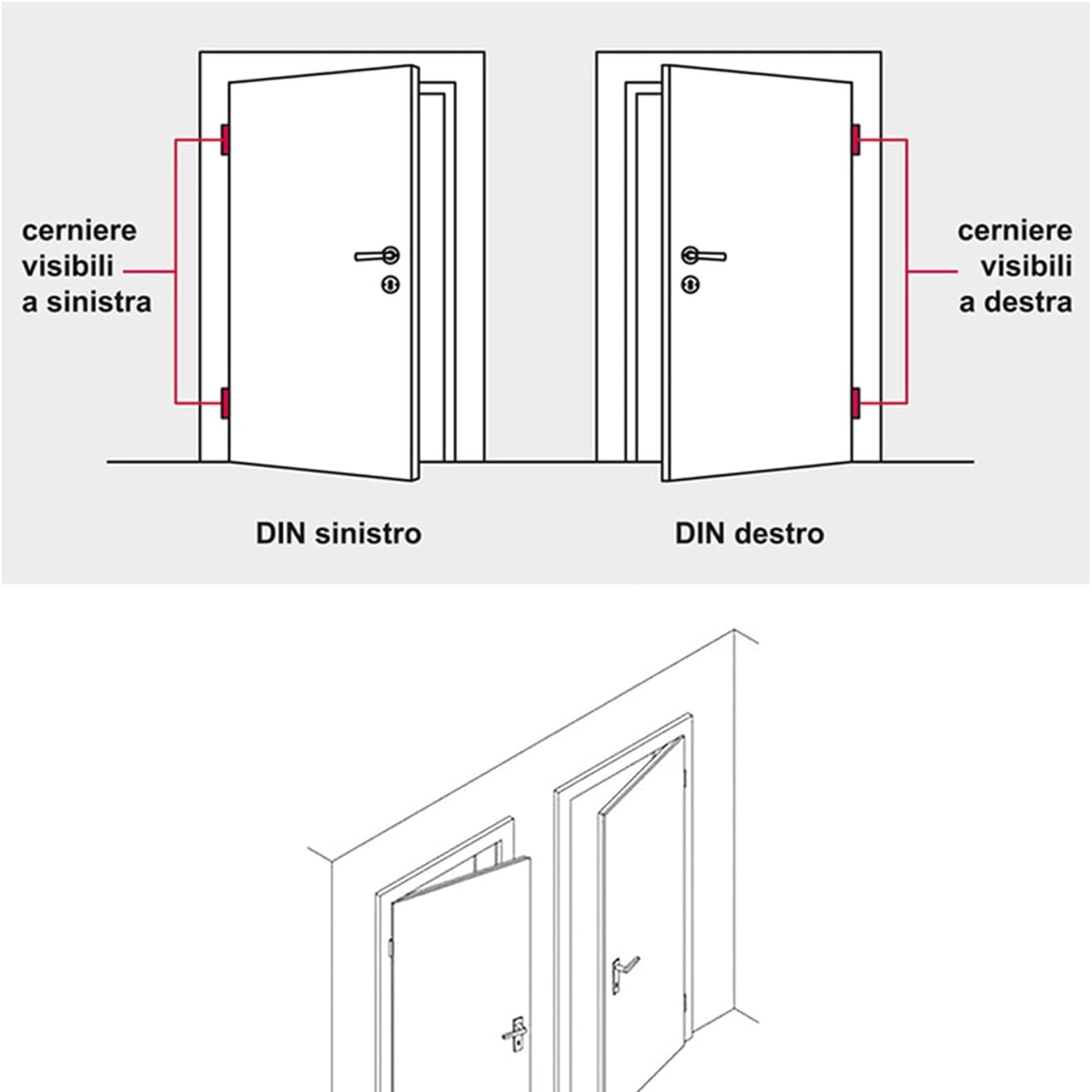
Standard butt hinges like these are not handed. The same hinge works on a left or right hung door. Just fit the leaves the correct way up so the knuckle sits on the hinge side of the door.

Can the pin be removed?

This listing describes a fixed pin design with sealed bearing races rather than a loose pin hinge. If you need a lift off hinge so the door can be removed without unscrewing, look for a loose pin or lift off model instead.

What finish will I see once fitted?

A satin silver finish with nickel plating. It is a soft brushed look rather than a mirror polish, which hides fingerprints and small scuffs better than high gloss hardware.

Will the finish match my door handles?

Satin stainless and satin nickel handles usually sit very close in tone. Polished chrome and brushed brass will read as a different finish. If matching matters, hold a hinge next to a handle in daylight before you commit to all the doors.

Can I use these outside?

They are specified for internal applications and can be used externally in the right environment. Sheltered, dry outdoor positions are more forgiving than exposed coastal ones. For fully exposed external doors, hardware rated specifically for that use is the safer choice.

Do they suit commercial buildings?

Yes. The supplier lists them as suitable for commercial and domestic property, and the grade 13 specification plus the ANSI hole pattern are both aimed at commercial door schedules. Offices, schools and apartment common areas are typical settings.

How do I look after them?

Wipe with a soft damp cloth and dry off. Skip abrasive pads, bleach and strong solvents, which will dull the satin finish. Tighten the screws once or twice a year on busy doors and keep dust and grit out of the knuckle.

Do the bearings need oiling?

The bearing races are sealed and are not designed to be packed with grease. A light wipe of the knuckle is usually all that is needed. If a hinge starts to bind, check the alignment and the screws first, because that is a more common cause than the bearings themselves.

How much does the pack weigh?

The item weight is listed as 1.59 kg for the set. That works out to a solid feel in the hand for each hinge, which is what you want from a 3mm stainless leaf.

What tools do I need to fit them?

A screwdriver or drill driver, a pencil, a tape measure and something to hold the door steady while you work. For a new mortice you will also need a sharp chisel and a mallet. A second pair of hands helps on heavy doors.

Can I buy just one pair?

This listing is sold as a four piece pack, which is two pairs. If you only need one door done, the spares are worth keeping for the next one. Hinges are one of those things you are glad to have in the drawer.

How long does delivery take and can I return them?

Yes. You can return it within 14 days of delivery in resaleable condition for a full refund, including standard delivery, on top of your Australian Consumer Law rights. Email us with your order number first and we send you the return address. If it arrives faulty or damaged, we pay the return postage.

What if they are not right for my door?

Measure your existing hinge before fitting anything, and if the size, corner style or thickness does not match, do not force it. Contact us with your measurements and we will tell you whether a different option suits, or arrange a return while the pack is unopened and unused.

Choosing Ball Bearing Door Hinges, A Practical Buyer's Guide

6 min read Hinge Company

The problem with a dropping, squeaking door

Most people do not think about door hinges until something goes wrong. The door starts to catch on the frame near the latch. You hear a groan every time someone walks through. Or you notice a gap at the top of the door that was not there when the place was new.

Nearly always, the cause is the same. A plain butt hinge has two leaves whose knuckles rotate directly against each other. There is nothing between them but metal and whatever lubricant was applied at the factory. Open and close that door ten times a day and in a few years the knuckles have worn an oval into themselves. The door sits slightly lower. The screws, which were already working loose from the vibration, loosen further. Now you are shaving the bottom of the door or packing out the strike plate to make it latch.

A ball bearing door hinge removes the root cause. Small steel balls sit in machined races inside the knuckle, so the two leaves roll against the bearings rather than grinding against each other. Friction drops. Wear drops with it. The door keeps hanging where you hung it.

How these hinges are built

This set is made from grade 304 stainless steel, the standard specification for door hardware that needs to resist corrosion without special treatment. Each leaf is 127mm long by 102mm wide, which is the familiar 5 inch by 4 inch size, with a 3mm thickness. That extra thickness matters. A thin leaf flexes under load, and flex is what lets a heavy door droop.

The corners are square rather than rounded. This is worth checking before you order, because a square corner hinge will not sit correctly in a mortice cut for a radius corner one, and the other way round leaves visible gaps at the corners. Look at your existing hinge before you buy.

Inside each knuckle are four steel ball bearings arranged across two bearing race joints. Spreading the load across two points rather than one is what lifts the capacity. The maximum adjusted door weight is 120 kg when three hinges carry the door. The knuckle diameter is 13mm and the minimum door thickness is 45mm, which rules out thin hollow core doors but covers solid core, engineered and most metal internal doors.

The finish is satin with nickel plating, giving a soft silver look. It is the sort of finish that sits quietly next to brushed handles and does not show every fingerprint the way polished chrome does.

Who these suit

If you are hanging anything solid, these are the right category of hardware. Solid core bedroom doors in a renovation. Office doors that get opened a hundred times a day. Apartment entry doors inside a building. Doors in a shop or clinic where a squeak becomes something everyone notices.

They are specified for internal applications and can be used externally in the right environment, which in practice means a sheltered position rather than a fully exposed one. Both commercial and domestic property are covered, and the hinges suit wooden, timber and metal internal doors.

Where they are overkill is a light hollow core door in a spare room. A standard 75mm or 100mm butt hinge handles that fine and costs less. Fitting a 5 inch hinge to a thin door also runs into the 45mm minimum thickness, so it simply will not work properly.

The other group worth mentioning is anyone dealing with fire doors. The supplier lists these as fire door hinges to BS EN 1935 grade 13. That grade is the one commonly specified for heavy and fire rated doorsets. Fire doors are regulated, though, and the hinge is only one part of a system that includes the door, frame, seals, closer and installation method. Check what your local rules and the door manufacturer require rather than assuming the hinge alone makes a door compliant.

How to choose and measure

Start with the hinge you already have. Take one off, or just measure it in place if that is easier. You want three numbers. Length of the leaf from top to bottom. Width of one leaf, measured from the edge of the knuckle to the outer edge of the plate (the full open hinge is roughly double that). Thickness of the plate.

If those come out around 127mm, 102mm and 3mm, you are in the right place. Then check the corners. Square or rounded. Then count the screw holes, which here is four per leaf, and look at whether your existing holes line up with the ANSI spacing. Even if they do not line up exactly, new screws into fresh timber usually hold better than old screws back into worn holes.

Next decide how many hinges per door. Two is normal for a standard internal door. Three is the recommendation for heavy doors and it is what the 120 kg rating assumes. Tall doors benefit from three as well, even if they are not especially heavy, because the middle hinge stops the leaf twisting over its length.

The pack gives you four hinges, which is two pairs. That covers two standard doors or one heavy door with a spare. If you are doing a whole house, count your doors and work out the packs from there.

Fitting notes

Most replacement jobs are quick. Take the weight of the door with a wedge or a helper. Unscrew the old leaves. Clean out the mortice and check its depth against the 3mm leaf. If the old hinge was thinner, you may need to pack behind the new one slightly, or deepen the recess a touch. Screw the new hinge to the door first, then offer the door up to the frame.

One habit that saves trouble later. On a heavy door, swap at least one screw per frame leaf for a longer screw that reaches past the frame lining and into the structural timber behind it. Short screws into a thin lining are the most common reason a heavy door starts to drop, no matter how good the hinge is.

If you are fitting to a metal door or frame, the supplied timber screws will not be suitable. You will need machine screws into tapped holes.

Care over the years

There is not much to do. Wipe the leaves and knuckle with a damp cloth and dry them. Avoid abrasive pads and harsh cleaners, which will take the sheen off a satin finish and never quite match again. Keep grit out of the knuckle, especially during building work when dust gets everywhere.

Once or twice a year, run a screwdriver over the screws on your busiest doors and nip up anything loose. The bearing races are sealed, so they do not want oil packed into them. If a door starts to bind, the fault is usually alignment or a loose screw rather than the bearings.

The short version

These are 127mm x 102mm x 3mm grade 304 stainless steel ball bearing hinges, four to a pack with screws included, rated to a maximum adjusted door weight of 120 kg across three hinges. Square corners, ANSI hole pattern, BS EN 1935 grade 13, 45mm minimum door thickness, satin nickel plated finish.

Measure your existing hinge first. If the numbers match and your door is solid, these will quieten it down and keep it hanging straight for a very long time. If your door is light and thin, spend less and buy a smaller hinge. Matching the hardware to the door is most of the job.

Browse the shop

Not sure which size you need?

Measure the length and width of one existing hinge leaf and send us the numbers, and we will confirm whether these fit before you order.

Ask us a question

Page summary

LOOTICH ball bearing door hinges supplied as a 4 piece pack (2 pairs) with fixing screws. Each hinge measures 127mm x 102mm with a 3mm leaf thickness, square corners and a 13mm knuckle diameter. Material is grade 304 stainless steel with a satin, nickel plated finish in silver. Each hinge has four steel ball bearings across two bearing race joints. Maximum adjusted door weight is 120 kg when three hinges are used, with a 45mm minimum door thickness. The hole pattern is ANSI with 4 holes per leaf, and the hinges are specified to BS EN 1935 grade 13 for fire door use. Suitable for wooden, timber and metal internal doors in commercial and domestic property. Item weight 1.59 kg. Country of origin is not listed by the maker.