
The complete guide
Choosing a Concealed Pivot Hinge for Your Door
A cleaner doorway starts with the right hardware
A hidden door can look simple from the outside. Getting it to move well takes more thought. The hinge needs to suit the door, the support around it and the space it swings through. A neat finish will not make up for a door that catches the floor or strains its fixings.
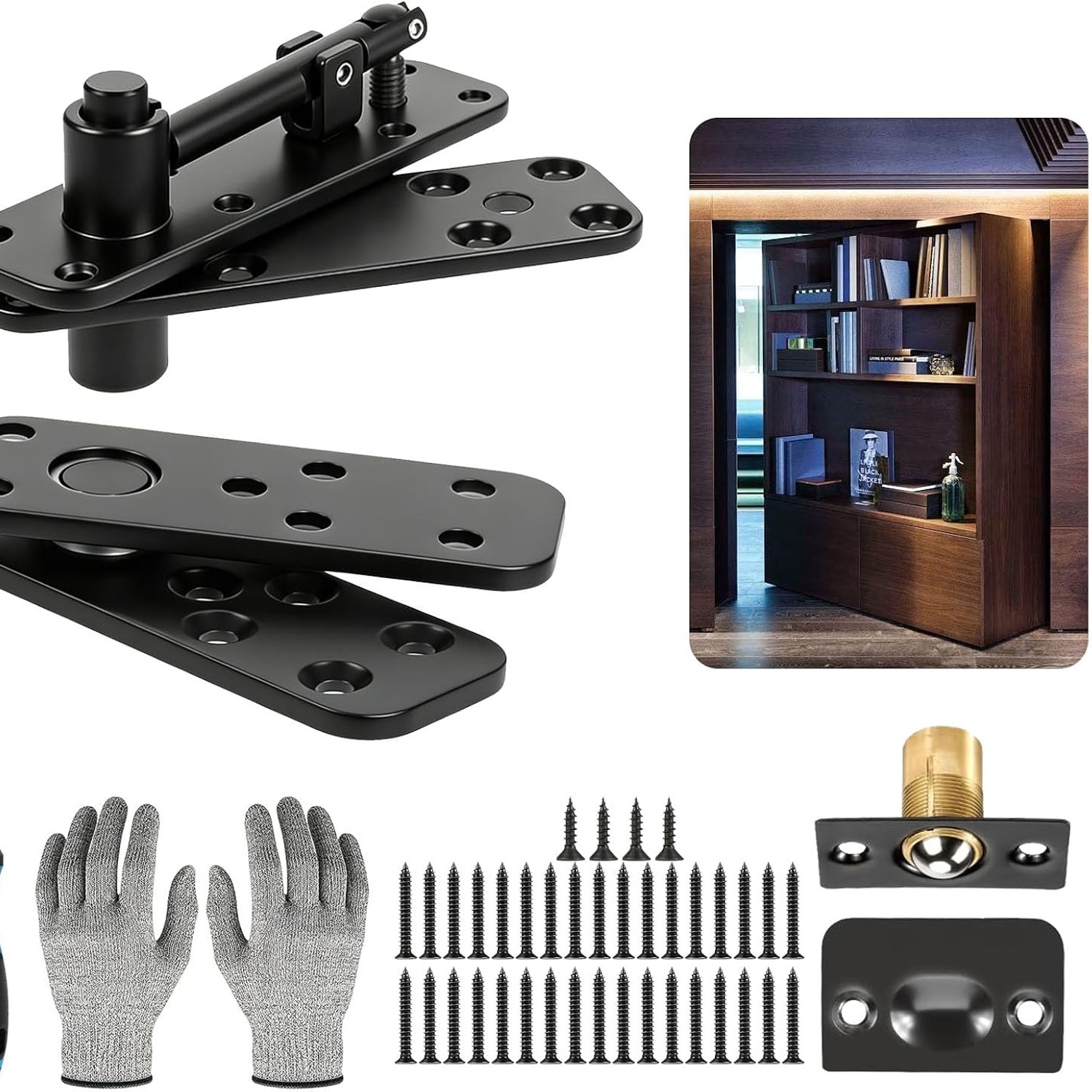
The AGJIQ concealed pivot door hinge set is one option for this kind of project. It is listed for timber doors, aluminium frame doors, bookshelf doors and storage doors. Its concealed mounting style is intended to keep the hardware discreet, while a retractable pin allows adjustment for alignment.
The useful question is not just whether you like the look. It is whether this particular pivot door hinge fits your design. This guide explains the listed features, the gaps in the available measurements and the checks worth making before you buy.
How a pivot hinge changes door movement
A conventional door usually turns on hinges fixed along one edge. A pivot arrangement turns around a pivot axis. That change affects the space the door needs and how you plan the opening.
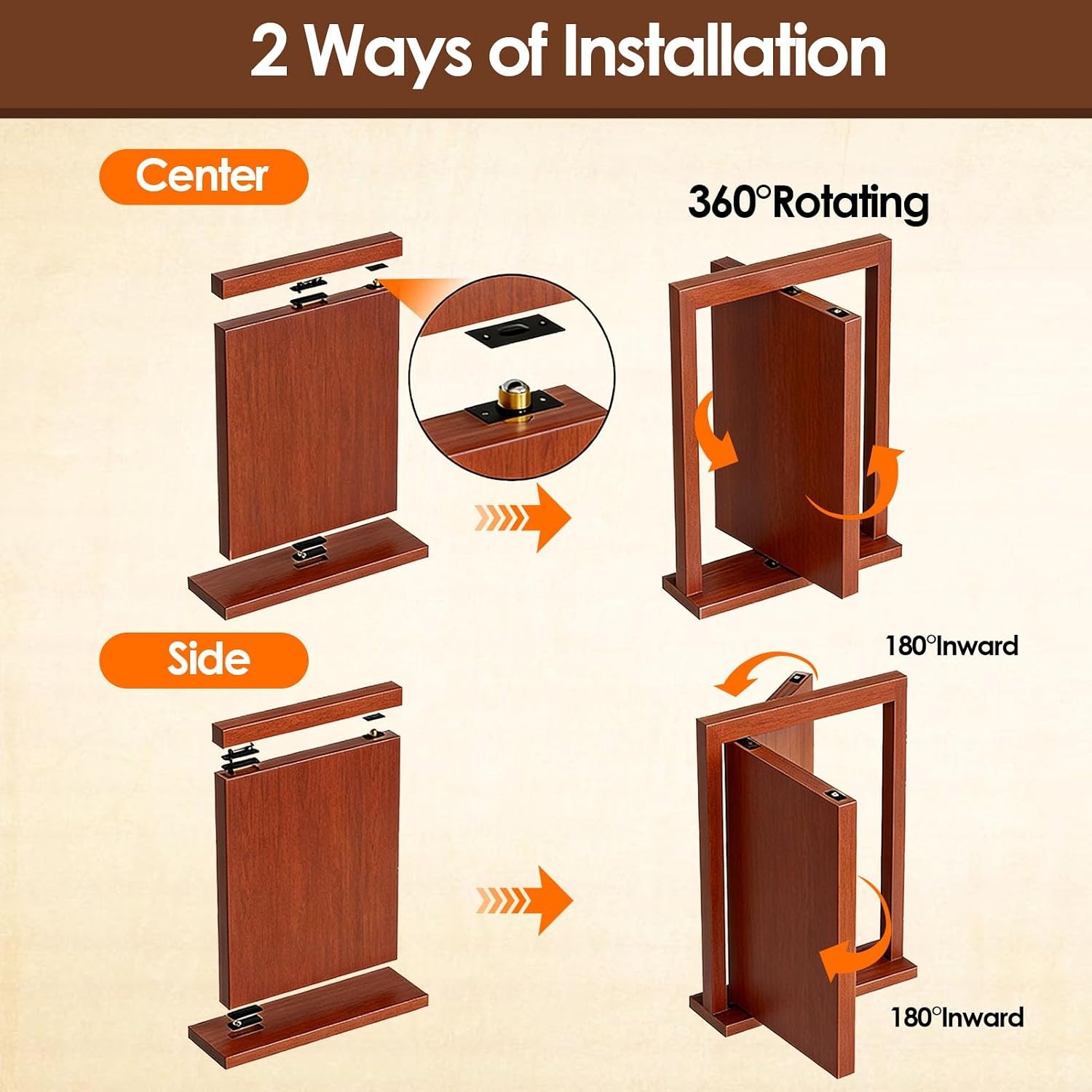
This model is described as having a centre-axis structure with 360-degree rotation. That is a feature of the hardware, not a promise that every fitted door can turn in a full circle. A frame, nearby wall or projecting handle may stop the door much sooner.
Picture the full door in motion before choosing its position. Think about both faces and every projecting part. On a bookshelf door, for example, the shelves can need more room than the flat panel behind them. A floor plan can help, but checking the actual space is better.
What this set offers
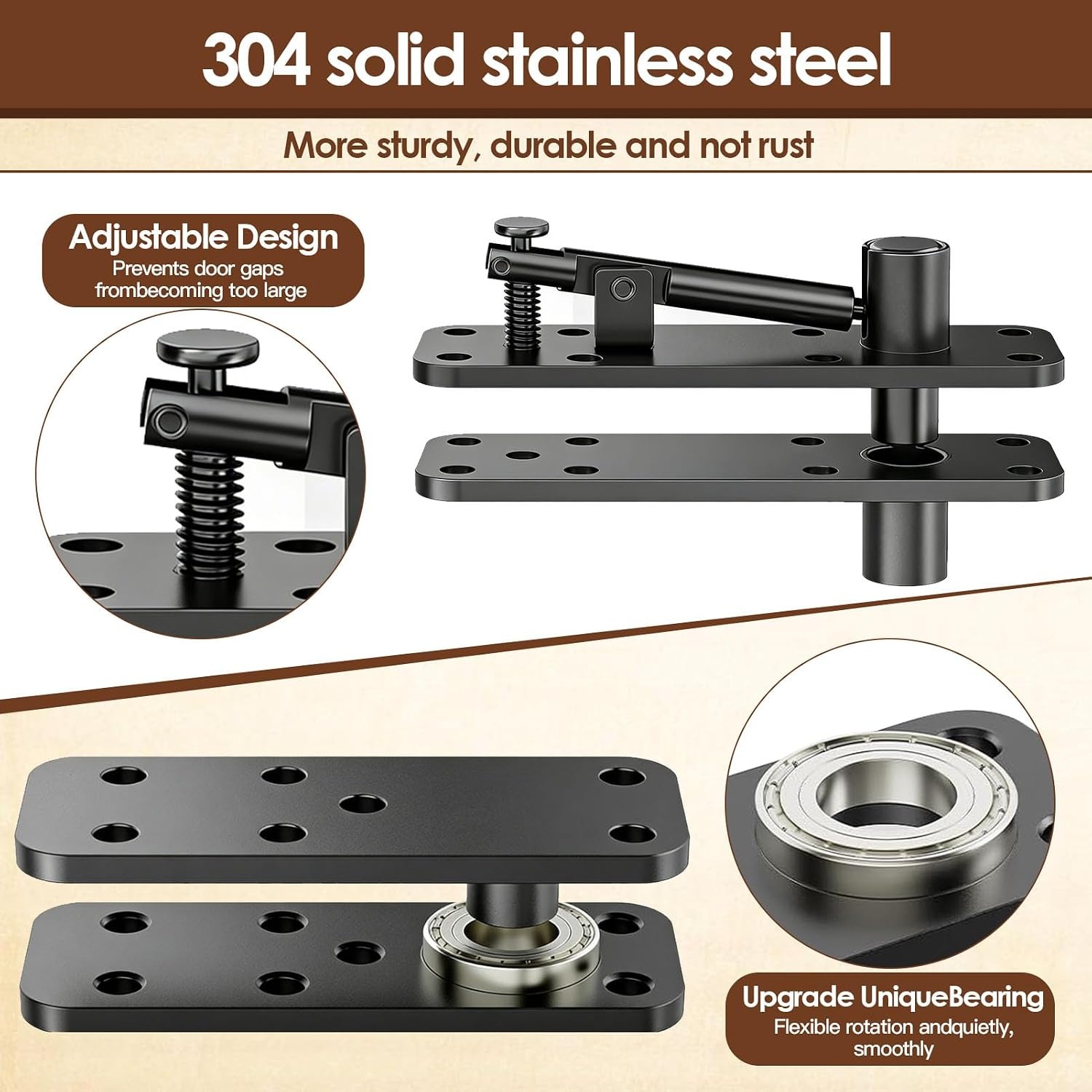
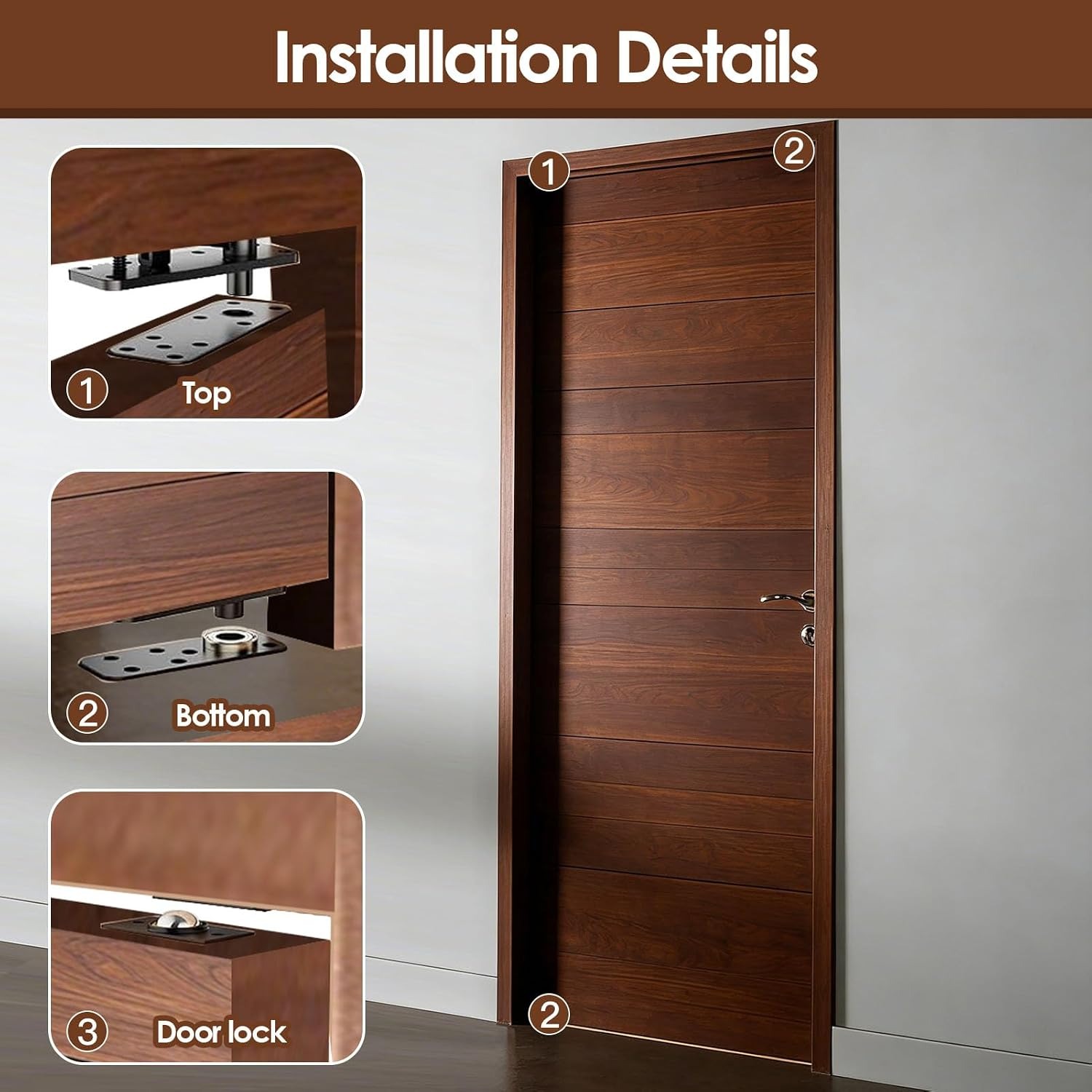
The listed features include concealed mounting, an adjustable retractable pin and a matte black finish. Supplier specifications identify stainless steel construction. These details make the set worth considering when the visual aim is a clean doorway with less obvious hardware.
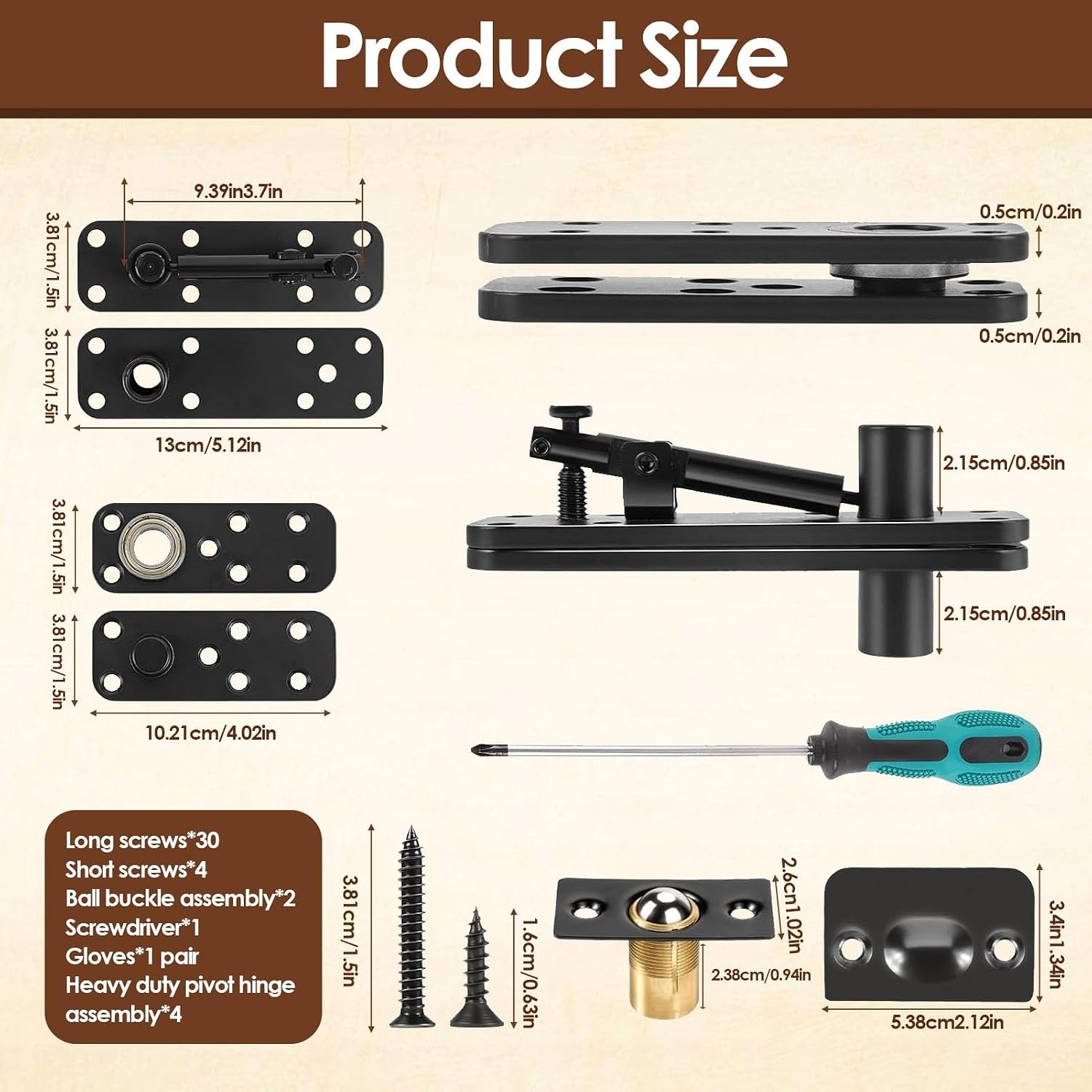
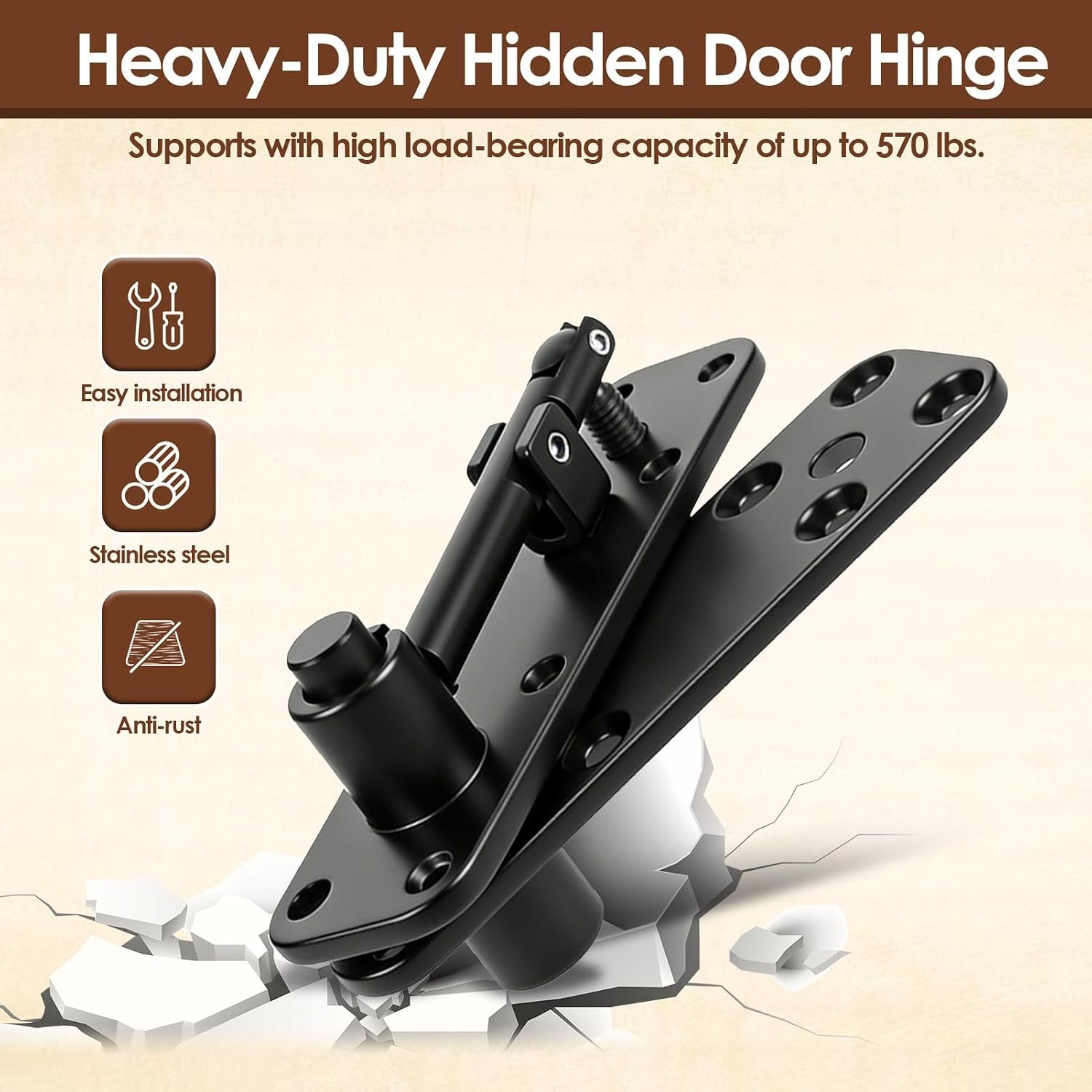
The listed maximum weight capacity is 570 pounds. Item weight is 1.07 kg, and the supplied length and width are 12.9 cm by 3.8 cm. Those are useful starting points, but they are not a complete installation drawing.
The maker does not give the height, fixing-hole layout, required door thickness or adjustment range. It also does not describe the test conditions behind the capacity figure. Treat these missing details as questions to settle before making cuts or committing to a door design.
Who a hidden pivot hinge may suit
A hidden pivot hinge may appeal if you want the doorway to blend into surrounding joinery. It can also be relevant to a custom storage opening where visible side hinges would not suit the planned finish.
The supplier lists both residential and commercial environments as possible uses. Still, a general application claim does not establish compliance for a particular building. Fire doors, escape routes and other regulated openings need hardware selected against their actual requirements.
For a straightforward replacement job, do not assume a pivot set will fit the spaces left by ordinary hinges. The mounting approach is different. Ask your installer what changes the door and its surroundings would need before deciding whether a conversion makes sense.
Read the capacity figure with care
It is easy to focus on the largest number when comparing heavy door hardware. The 570-pound listed capacity matters, but it should not be the only reason for choosing this set.
A door is part of a larger assembly. Its size, construction, loading and fixing points all affect the job. The surrounding support matters too. A capacity claim cannot tell you whether an existing frame or mounting surface is suitable.
For a bookshelf door hinge project, include everything that moves with the door. That means the shelving and its expected contents, not just the bare panel. Give those details to the person assessing the installation.
Do not plan right up to a stated limit without understanding the supplier's conditions. Here, those conditions are not supplied. Seek confirmation for your particular design rather than treating the rating as a universal fit.
Measure more than length and width
The listed 12.9 cm length and 3.8 cm width help identify the scale of the hardware. They do not show how deeply it must sit, where each fixing goes or what clearance is needed around the pin.
Before ordering a custom door pivot, obtain the full fitting details. Compare them with the actual door and support, not just a sketch or an estimated size. This is especially important if the joinery is already built.
Door thickness limits are not listed by the maker. Neither are cut-out dimensions or fastener sizes. Avoid asking a joiner to machine the door from the headline measurements alone.
If you are replacing an existing pivot, compare more than the outer shape. Similar-looking hardware can still have different fixing positions or mounting needs. A direct replacement should be confirmed, not guessed.
Think through the door material
Timber and aluminium frame doors are both among the supplier's listed applications. They present different fitting questions, so compatibility needs checking at the door itself.
For a timber door pivot hinge, the installer needs to know how the door is built and where secure fixings can go. A decorative face does not reveal the construction underneath. Share the door maker's details if you have them.
For an aluminium frame door hinge, check the frame profile and the proposed fixing method. Do not assume that hardware supplied with the set suits every profile.
The same care applies to storage doors and other custom panels. The application name gives a starting point. The actual construction determines what is practical.
Plan alignment before fitting
The retractable pin is described as allowing adjustment for improved alignment and fit. That can be useful when trying to achieve even gaps and a tidy closed position.
However, the amount and direction of adjustment are not stated. Do not rely on it to correct a poorly positioned mounting point or an unsuitable opening. Accurate planning still comes first.
Decide how the door should sit when closed and where it should stop when open. Consider handles, catches and other hardware as part of the same plan. Self-closing and hold-open functions are not listed by the maker for this set, so arrange any needed functions separately with your installer.
A careful dry check can catch problems before final fixing. Follow the supplied instructions and keep a heavy door safely supported throughout the work.
Check the finish against the setting
Supplier specifications list a black colour with a matte finish. If you are coordinating matte black door hardware, compare the actual finish where possible. Matching colour names do not always mean matching appearance.
The supplier also describes a surface treatment intended to help resist rust, corrosion and daily wear. That is not the same as a stated exterior exposure rating. The stainless steel grade is not given either.
For a sheltered indoor project, the main questions may be appearance and fitting. For an exposed or wet location, ask for clear suitability information before choosing. Avoid treating stainless steel as a guarantee for every environment.
Know what arrives and what remains unknown
The listing describes a door pivot hinge set with installation hardware. It does not provide an exact piece count or an itemised fastener list.
Confirm the contents if your project depends on a particular mounting arrangement. Your installer may also need to assess whether the supplied fixings suit the supporting material. Included hardware should not replace that check.
Delivery lead time is not listed by the maker. If the installation is tied to other building work, check the delivery estimate before booking labour.
Warranty and product-specific return terms are also not supplied here. Read the store policies before purchase, especially if you are still confirming fit. It is easier to resolve a compatibility question before modifying the product or the door.
Care after installation
Keep accessible surfaces clean with a soft cloth, then dry them. Avoid abrasive pads and harsh cleaners that could mark the finish. Building dust and debris should be kept away from the pivot area.
Periodically check that the door still moves evenly and that its gaps remain consistent. If movement becomes loose, noisy or difficult, stop and investigate rather than forcing it. A change in movement can be a reason to have the installation checked.
No lubrication type or service interval is specified here. Follow the instructions supplied with the product. Adding an unsuitable lubricant without guidance may create more work rather than solve the cause.
The short version
This AGJIQ set offers concealed mounting, a retractable adjustment pin and listed 360-degree pivot movement. Its supplier specifications include stainless steel, a matte black finish and a 570-pound maximum capacity.
The next step is to confirm fit. Check the complete moving load, opening path, supporting structure and full installation dimensions. Once those points are settled, you can judge whether this heavy duty pivot hinge is the right choice for your door rather than simply the right look.