Hinge Company
Company
Shop By Category
T&Cs
Shop Online
  • Box contents listed
  • Free tracked Australia-wide delivery over $150
  • 14-day returns

Invisible door hinges | concealed hidden hinges | 180 degree hidden hinges

Invisible Concealed Door Hinges (2 Pairs, 180 Degree)

$43.99 $52.99 Save $9
  • Completely Concealed
  • Full 180 Degree Swing
  • Stainless Steel Build
  • 22 Pound Rating

Price: $43.99 $52.99

  • Free tracked Australia-wide delivery on orders $150+, otherwise a flat $15
  • Pay by card or PayPal, handled by the payment provider
  • 14 days to change your mind, plus your statutory rights
Product specifications
Hinge TypeInvisible concealed (mortise mount)
MaterialStainless steel
FinishPolished
ColourSilver
Hinge Dimensions44mm long x 44mm wide
Mounting TypeDoor mount
Hole Count8 per hinge
Maximum Weight Capacity22 pounds
Opening Angle180 degrees
Unit Count2 count
Item Weight246 g
BrandAuto-plaza
Model Number4e41da5a-1bc3-4d23-845a-0cfd0fc59de5
ManufacturerAuto_plaza
UPC778299509404
Weight246 g
Shipping & returns

Tracked delivery anywhere in Australia. It is free on orders of $150 or more, and a flat $15 below that.

If it is not right for you, send it back within 14 days of delivery in resaleable condition and we refund the price you paid, including standard delivery. That is a voluntary policy we offer on top of your legal rights. You cover the cost of returning it unless the item is faulty.

If it arrives faulty, damaged or not as described, we put it right at no cost to you under the Australian Consumer Law and the Competition and Consumer Act 2010, return postage included.

Shipping details · Refunds and returns

Completely ConcealedNothing shows on the outside when the door is shut.
Full 180 Degree SwingThe door opens right back against the carcass.
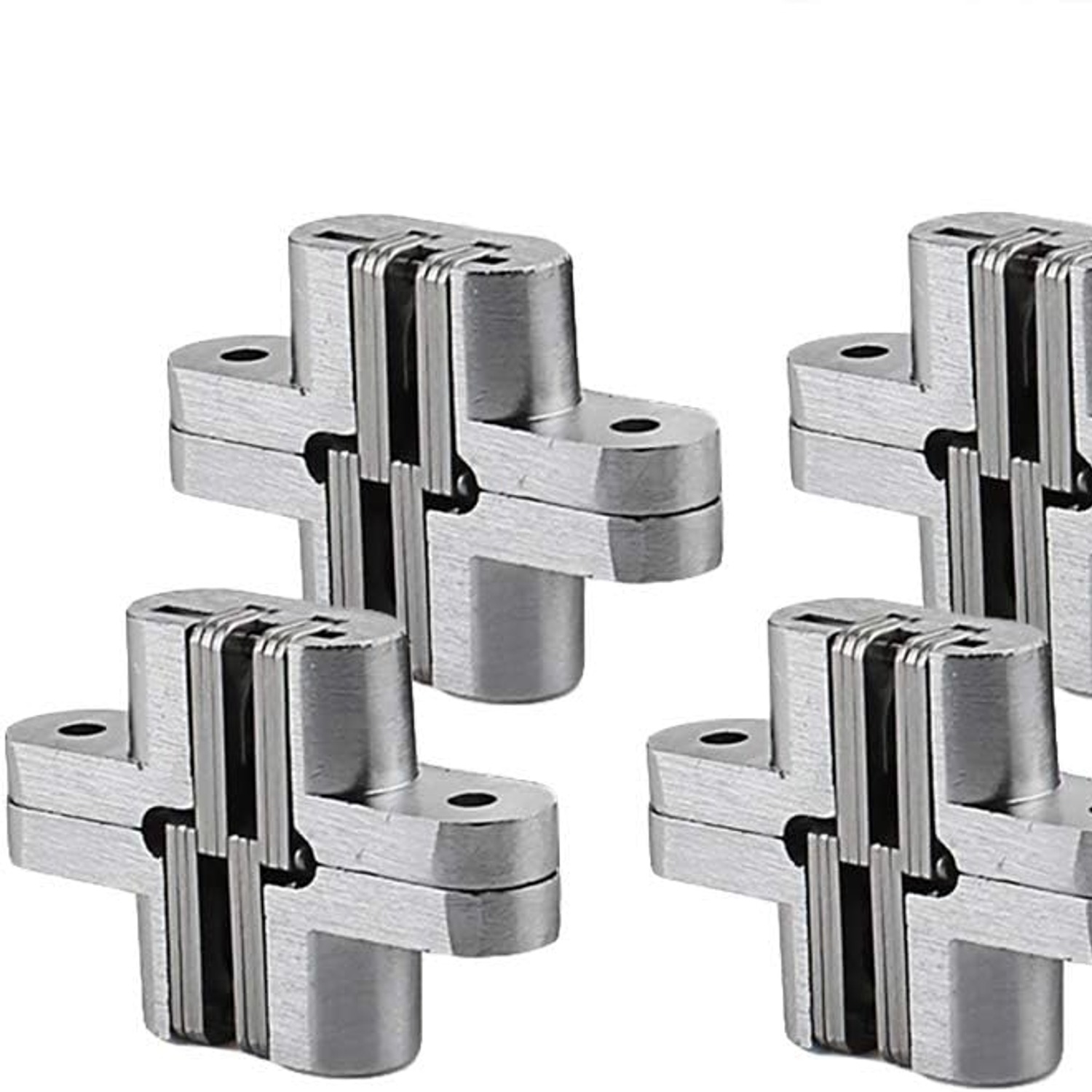
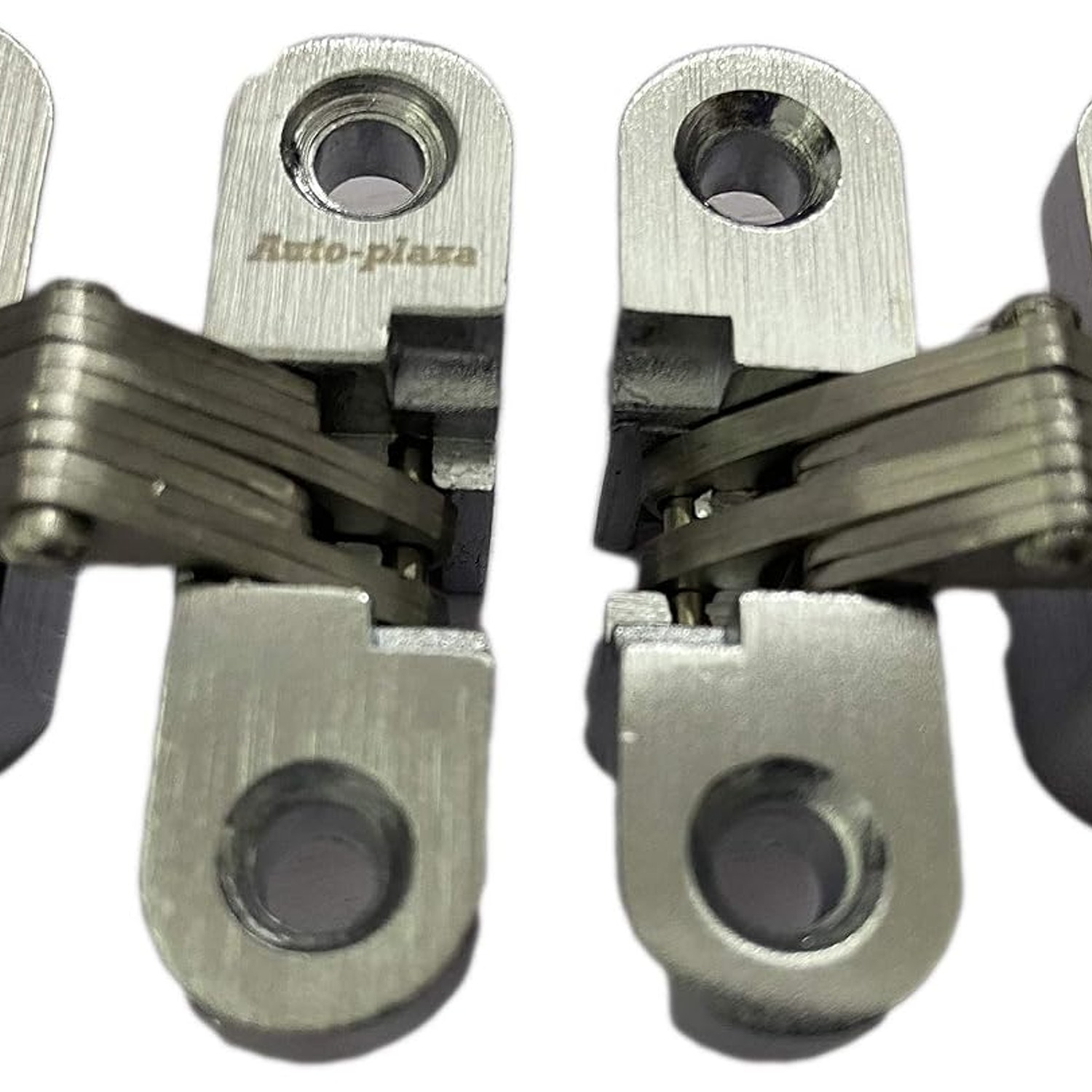
Stainless Steel BuildPolished silver finish with eight mounting holes per hinge.
22 Pound RatingRated to carry up to 22 pounds per hinge.

Give cabinets and joinery a clean, unbroken line with invisible door hinges that disappear the moment the door closes.

Polished stainless steel construction, eight mounting holes per hinge, a 22 pound load rating and a full 180 degree swing for doors that open wide and sit flush.

These invisible door hinges mortise into the door edge and the frame so the closed door shows a clean, unbroken face.

Each hinge swings a full 180 degrees, which lets the door fold right back out of the way when you need full access.

The hinges are stainless steel with a polished silver finish, measuring 44mm long by 44mm wide.

Eight mounting holes per hinge spread the load across the timber rather than relying on one or two fixings.

Supplied as a set with a maximum weight capacity of 22 pounds per hinge, suited to cabinet doors, boxes and light joinery.

Invisible Concealed Door Hinges (2 Pairs, 180 Degree)

A visible hinge is one of the quickest ways to make good joinery look ordinary. Butt hinges, piano hinges and surface mounted barrel hinges all break the line of a door face, and once you notice them you keep noticing them. Invisible hinges solve that by living entirely inside the door edge and the frame. They are cut into both parts, so when the door closes there is nothing to see but the gap between the two timber edges.

This set uses stainless steel hinges with a polished silver finish, each measuring 44mm long by 44mm wide. Eight mounting holes per hinge give the screws plenty of grip and spread the load across a wider patch of timber. That matters on a concealed hinge, because the whole weight of the door hangs off a small mortise rather than a long surface plate. Each hinge is rated to a maximum weight capacity of 22 pounds.

The full 180 degree opening is the practical part. Plenty of concealed hinges stop short at 90 or 110 degrees, which is fine for a lid but frustrating on a cabinet you want to reach right into. With 180 degrees of travel the door folds back flat against the side of the carcass. For boxes, display cases and shallow cupboards, that extra swing is the difference between easy access and constant fiddling.

Fitting is traditional mortise work rather than a drilled cup. You hang the door in the opening first, position the hinge, scribe around it with a marking knife, then pare the recess to the exact thickness of the hinge leaf so it finishes flush with the timber surface. Pilot drill every screw hole, fit the hinges to the door, then transfer the positions to the frame and repeat. Work slowly and the result is a door that sits dead level with no hinge in sight.

The set suits cabinet doors, lift lids, jewellery and keepsake boxes, display cabinets, small wardrobes and custom joinery where you want the hardware to disappear. Because the hinge is buried in the timber, both the door edge and the frame need enough thickness to take the mortise without weakening them, so check your stock before you start cutting.

Not sure yet? That is fine.

A hinge has to fit the door, gate or cabinet it is going on, and you cannot always judge that from a photograph. If it is not right for you, send it back within 14 days of delivery in resaleable condition and we refund the price you paid, including standard delivery. That is on top of your Australian Consumer Law rights if anything arrives faulty.

If it turns up faulty, damaged or not as described, that is on us. The Australian Consumer Law and the Competition and Consumer Act 2010 covers you, and we pay the return postage. Read the full detail on our refunds and returns page, or ask us anything before you order.

Frequently Asked Questions

What exactly are invisible door hinges?

They are hinges that are cut into the edge of the door and the matching edge of the frame, rather than screwed to the face. When the door is closed the hinge is completely enclosed by the timber, so nothing is visible from the outside. The look is a plain gap between door and frame with no hardware.

How are they different from normal butt hinges?

A butt hinge has two flat leaves screwed to the door edge and frame, and the knuckle stays visible along the gap when the door is shut. An invisible hinge folds inside the mortise so even the knuckle disappears. That is the main reason people choose them for fine joinery.

How far do these hinges open?

They open a full 180 degrees. On a cabinet that means the door swings right back against the side of the carcass, giving you clear access to the full opening. Many concealed hinges stop at 90 or 110 degrees, so the wider travel is worth having.

How much weight can each hinge hold?

The listed maximum weight capacity is 22 pounds per hinge. Using two hinges on a door spreads that load, but the real limit also depends on how well the timber holds the screws. For heavier doors, add a third hinge or step up to a larger hinge.

What size are the hinges?

Each hinge measures 44mm long by 44mm wide. That is the footprint you will be cutting into the door edge and the frame, so measure your stock before ordering. Overall closed thickness is not listed by the maker.

What material are they made from?

The hinges are stainless steel with a polished finish, listed in silver. Stainless holds up better than plain steel in humid rooms and resists surface rust. The polished look sits well with other bright cabinet hardware.

How many hinges come in the set?

The unit count listed is 2. Check your project before ordering, since a single door usually needs two hinges and a taller or heavier door may need three.

Do screws come with them?

Mounting hardware is typically supplied with hinges of this type, but the exact contents are not listed by the maker. If you are fitting into hardwood or a thin panel, it is worth having a few spare screws of the right gauge and length on hand anyway.

How many screw holes does each hinge have?

Each hinge has eight mounting holes. Spreading the fixings over eight points keeps the load off any single screw, which matters on a concealed hinge where the whole door hangs from a small recess. Use every hole for the best result.

Are these suitable for a full size internal house door?

They are better suited to cabinet doors, boxes and light joinery given the 22 pound rating and 44mm size. A standard internal house door is far heavier and needs a larger architectural concealed hinge. For the best invisible door hinges on a passage door, look at heavy duty models rated for that weight.

Can I use these on a jewellery box or keepsake box?

Yes, this is a natural fit as long as the box walls are thick enough to take the mortise. Boxes are light, so the weight rating is not an issue. Many people looking for the best hinges for jewellery boxes choose a concealed type exactly for that clean closed look.

Will they work on a kitchen cupboard?

They can, provided the door is within the weight rating and the door and carcass edges are thick enough to be mortised. Keep in mind that kitchen doors usually need adjustment after fitting, and these hinges do not have the three way adjustment screws found on European cup hinges.

Are they adjustable after installation?

Mortise style invisible hinges are not adjustable in the way cup hinges are. The alignment comes from accurate marking and cutting during the fit. That is why it pays to hang the door in the opening first and scribe the positions rather than guessing.

What tools do I need to fit them?

A marking knife or sharp pencil, a marking gauge, a sharp chisel and mallet, a drill with a small pilot bit, and a screwdriver. A router with a straight bit speeds up the recess if you are doing several doors. Clamps help hold the door steady while you work.

How deep should the recess be?

Deep enough that the hinge leaf finishes flush with the surface of the timber, no more. Set a marking gauge to the hinge thickness and score the depth line before you start chiselling. If the recess is too deep the door will bind when it closes.

How thick does the door need to be?

The door edge has to be thick enough to take the mortise and still have solid timber either side of it. As a rough guide, leave clear material on both faces after the recess is cut. Thin panels or hollow core stock are not suitable.

Can I fit them to MDF or chipboard?

MDF will take them if the panel is thick enough and you pilot drill carefully, though screws hold less well in MDF than in solid timber. Chipboard is a poor choice for concealed hinges because the mortise removes a lot of the core. Solid hardwood gives the strongest fixing.

Do these hinges self close?

No, these are plain pivoting hinges with no spring or soft close mechanism. The door stays where you leave it. If you want the door to pull itself shut, add a separate magnetic or ball catch.

Will they work on a lift up lid?

Yes, they are often used on lids for boxes and chests. The 180 degree range lets the lid fold back fully. For deeper boxes you may want a lid stay as well so the lid does not swing past the balance point.

Can I use them on an outdoor cabinet?

Stainless steel copes better with moisture than plain steel, so an undercover outdoor position is possible. Full exposure to rain and salt air is harder on any hardware, and the polished finish will dull over time. Dry the hinges after cleaning if they live in a damp spot.

How do I keep them working smoothly?

Keep dust out of the knuckle, wipe the leaves with a soft dry cloth, and retighten the screws every few months on doors that get heavy use. A trace of light machine oil on the pivot can quieten a squeak. Avoid abrasive cleaners that would scratch the polish.

Can I paint over them?

It is better not to. Paint builds up in the folding mechanism and will make the action stiff or stop it closing flush. If the door is being painted, fit the hinges after the finish has cured, or mask them carefully.

Do they need a specific left or right orientation?

Invisible hinges of this style are symmetrical and can be mounted on either side of the door. Decide which way the door should swing first, then mark out from there. Do a dry fit before any final screwing.

How many hinges should I use per door?

Two is standard for a small to medium cabinet door. For a taller door, or one approaching the weight limit, use three evenly spaced hinges to share the load and reduce sag. More fixing points also help keep a tall door straight.

Will the door still shut flush?

Yes, that is the point of the design. When the recesses are cut to the right depth the door closes tight against the frame with just a hairline gap. If it stands proud or binds, the recess depth is usually the culprit.

Are these the best choice for frameless cabinets?

They work well where you want a plain flush front with no visible hardware. For frameless kitchen runs with lots of doors, cup hinges are easier to adjust in bulk. For a feature piece or a display cabinet, concealed hinges usually look better.

What is the item weight of the set?

The listed item weight is 246 g for the set as supplied. That figure covers the hinges and any included hardware as packaged.

How long does delivery take?

We deliver anywhere in Australia with a tracked courier. Most orders arrive within 3 to 7 working days of the order date, a little longer to regional and remote addresses. Delivery is free on orders of $150 or more and a flat $15 under that. You get a tracking link by email as soon as the parcel is on its way.

Do these make a good gift for someone who works with timber?

They do. Good concealed hardware is the sort of thing a woodworker is always pleased to have in the drawer, and a set of stainless hinges is small enough to post easily. Pair them with a sharp chisel or a marking gauge for a useful gift set.

What if they are not right for my project?

Contact us with your order number and tell us what went wrong, whether it is a sizing mismatch, damage in transit or simply the wrong hinge for the job. We will sort out a return, exchange or refund under our returns policy. Keep the packaging and leave the hinges unfitted until you have checked them against your door.

How to Choose and Fit Invisible Door Hinges

6 min read Hinge Company

The problem with hinges you can see

You can spend a weekend building a cabinet, sand it smooth, get the grain matching across the doors, apply three coats of oil, and then screw on a pair of shiny butt hinges that drag your eye straight to them. Hardware has a way of doing that. The door face is the thing people look at, and anything breaking that face reads as a join rather than a surface.

Invisible hinges fix the problem by getting out of the way. They are cut into the edge of the door and the matching edge of the frame, so the whole mechanism folds up inside the timber. Close the door and there is nothing to see but a thin shadow line. Open it and the hinge unfolds out of its recess.

This set is a pair of stainless steel hinges, 44mm long by 44mm wide, with a polished silver finish. Each hinge carries up to 22 pounds and opens a full 180 degrees. They suit cabinet doors, lift lids, boxes, display cases and custom joinery where the hardware is supposed to be felt rather than seen.

How a concealed hinge actually works

A butt hinge is two flat plates joined by a pin. One plate screws to the door edge, the other to the frame, and the knuckle sits in the gap between them. Simple, strong, visible.

A concealed hinge of this type uses a linked mechanism instead. When the door is shut, the links fold flat into two small recesses, one in the door and one in the frame. When the door opens, the links unfold and swing the door clear of the frame. Because the pivot moves as the door opens, the door can swing well past 90 degrees without the edge fouling the carcass.

That is why the 180 degree figure matters. A lot of hidden hinges stop at 90 or 110 degrees, which is fine for a lid but annoying on a cupboard you want to reach into properly. At 180 degrees the door lies back flat against the side of the cabinet and stays out of your way.

The eight mounting holes per hinge are there for a reason too. On a surface mounted hinge the leaf spreads the load across a wide area of timber. A concealed hinge has a smaller footprint, so the screws do more work. Eight fixing points share that load and reduce the chance of one screw pulling out over time.

Who these suit

Think about weight first. At 22 pounds per hinge, a pair carries a fair amount for a cabinet door but is not meant for a full size internal house door. Passage doors are much heavier and need an architectural concealed hinge rated for that duty. If your project is a wardrobe front, a display cabinet, a kitchen cupboard door, a chest lid or a keepsake box, you are in the right territory.

Thickness matters next. Because the hinge buries itself in the timber, both the door edge and the frame edge need enough material to take the recess and still have solid wood left either side. Hollow core panels and thin plywood are not suitable. Solid timber gives the best screw hold, MDF works if the panel is thick enough and you pilot drill carefully, and chipboard is the weakest option because the mortise removes so much of the core.

One more thing to consider is adjustment. European cup hinges have three adjustment screws that let you nudge a door up, across and in or out after it is hung. Mortise hinges do not. All the alignment comes from how accurately you mark and cut. That is not a problem if you take your time, but it does mean this is a measure twice job.

Fitting them without the headaches

The order of work is what makes this easy or hard. Hang the door in the opening first and pack it with shims so the gaps are even all round. That gives you a reference to mark against, rather than trying to calculate positions on a bench.

With the door held in place, decide where the hinges go, usually a consistent distance down from the top and up from the bottom. Hold a hinge in position and scribe around it with a marking knife. A knife line is far more accurate than a pencil line, and the cut edge gives your chisel something to register against.

Set a marking gauge to the thickness of the hinge leaf and run it along the inside of the scribed area to mark the depth. That depth line is the single most important mark in the whole job. Cut too shallow and the hinge stands proud, so the door will not close. Cut too deep and the door binds against the frame.

Pare the recess with a sharp chisel, working across the grain in shallow passes rather than trying to lift out a thick chip. A series of light chisel cuts across the length of the recess breaks the waste into manageable pieces. A router with a straight bit and a simple template is quicker if you have several doors to do.

Test fit before drilling. The hinge should sit flush with the surface with no rocking. Then pilot drill each screw hole, ideally with a self centring bit so the screws pull the hinge tight rather than dragging it sideways. Fit the hinges to the door first, offer the door back into the opening, mark the frame positions, and repeat the process on the frame.

Screw everything down, check the swing, and adjust the recess depth with a few chisel strokes if the door binds anywhere. Done properly the door closes with a quiet click and sits dead level with the frame.

Looking after them

Concealed hinges need very little attention, but a bit of care keeps them smooth. Dust is the main enemy, since it settles in the folding links and gradually makes the action gritty. A wipe with a soft dry cloth every so often is enough.

In damp rooms like bathrooms and laundries, dry the hinge after cleaning so moisture does not sit in the knuckle. Stainless steel resists corrosion well, but no finish likes standing water. Skip abrasive pads, scouring powders and bleach based sprays, all of which will dull a polished surface.

Retighten the mounting screws a couple of times a year on doors that get opened constantly. A screw that has worked slightly loose is easy to fix early and a nuisance to fix once the hole has worn. A trace of light machine oil on the pivot will quiet a squeak without attracting grime.

If the door is being painted, fit the hinges afterwards or mask them properly. Paint building up in the mechanism is the most common reason a concealed hinge stops closing flush.

Choosing between hinge types

Quick comparison if you are still deciding. Butt hinges are cheap, strong and easy to fit, but always visible. Cup hinges are adjustable and fast on a kitchen full of doors, but they take up room inside the carcass and show their arms when the door opens. Piano hinges are great for long lids and terrible for looks.

Concealed mortise hinges, like these, win on appearance and lose on adjustability. They are the right call when the finished look matters most, on a feature cabinet, a fine box, a built in unit where you want the joinery to read as one continuous surface.

The short version

These are stainless steel invisible hinges, 44mm square, polished silver, two in the set. Each one takes up to 22 pounds and opens a full 180 degrees, with eight mounting holes to spread the load.

They work best on cabinet doors, lids, boxes and joinery built from solid timber thick enough to take the mortise. They are not for heavy passage doors, and they are not adjustable once fitted, so accurate marking is the whole job.

Take your time with the recess depth, use every screw hole, and you will end up with a door that opens wide, closes flush and shows no hardware at all.

Browse the shop

Not sure which hinge suits your door?

Send us your door size, thickness and weight and we will tell you whether these hinges are the right fit.

Ask us a question

Page summary

Invisible concealed door hinges from Auto-plaza, supplied as a 2 count set. Each hinge is stainless steel with a polished silver finish and measures 44mm long by 44mm wide, with 8 mounting holes and a door mount fixing. They open a full 180 degrees and carry a maximum weight capacity of 22 pounds per hinge. Total item weight is 246 g. The hinges mortise into the door edge and frame so no hardware is visible when the door is closed, which suits cabinet doors, boxes, display cases and custom joinery. UPC 778299509404, model 4e41da5a-1bc3-4d23-845a-0cfd0fc59de5, condition new. Colour is silver. Country of origin and overall thickness are not listed by the maker.